Selected Projects / Building a scalable Design System
Building a scalable Design System
ROLE
Product Design Lead
TIMELINE
Apr 2021 – Oct 2023
CONTRIBUTIONS
Strategy, Leadership, Design System
OUTCOME
A scalable, robust design system driving consistency and team efficiency
Summary
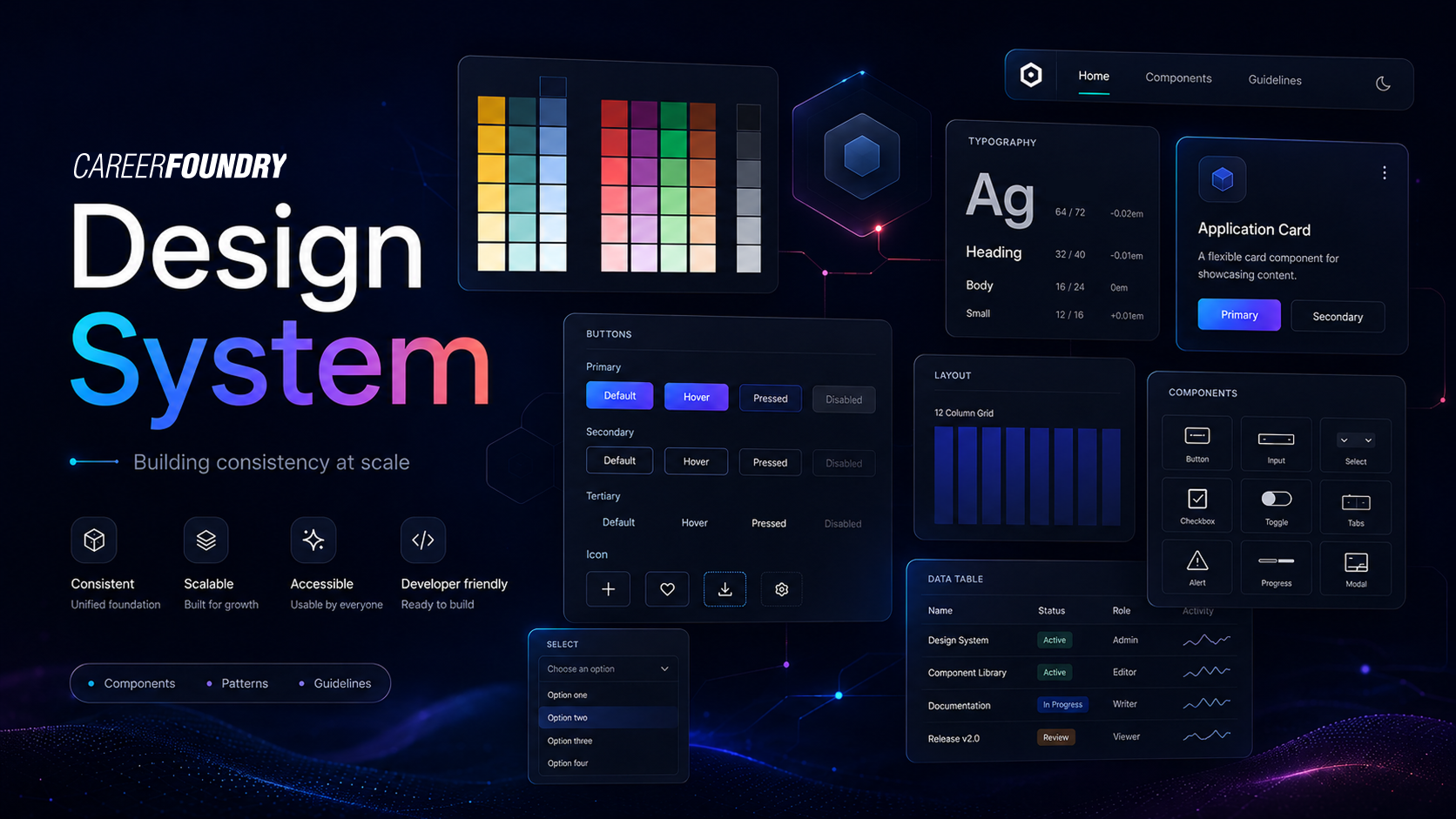
I led the evolution of our component library into a company-wide design system for a 120+ person organisation. From securing leadership buy-in to defining strategy, governance and implementation, the challenge was to create consistency at scale—without turning the system into a creative constraint.
PROJECT OVERVIEW
A single source of truth for design across the company
As our products and teams grew, our existing component library was no longer enough. Components existed, but we needed a shared system around them: common principles, clearer ownership, contribution processes and a way to scale across teams.
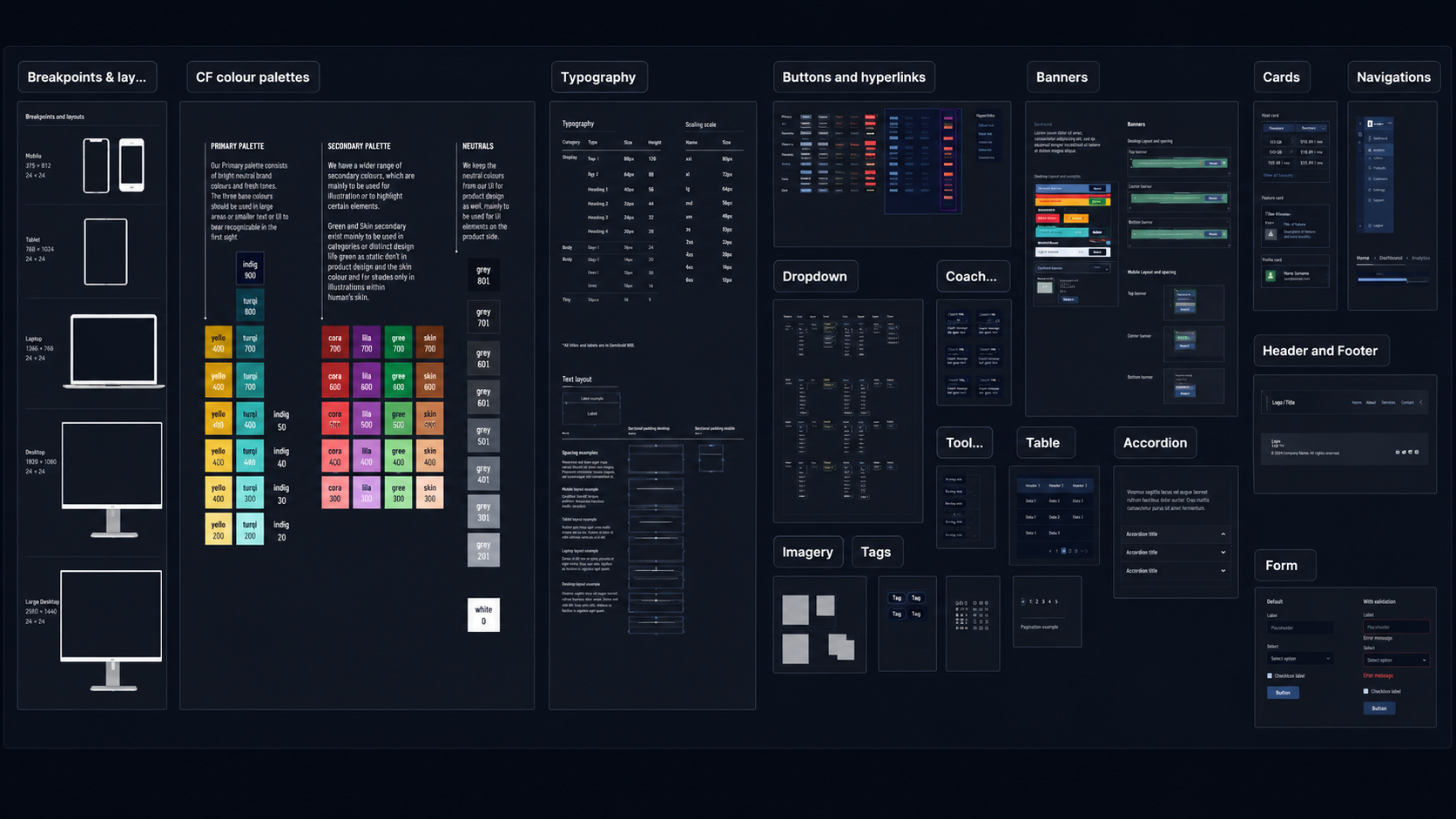
We used a future-backwards workshop to bring together stakeholders from marketing, product and engineering. Together, we reflected on where we were, aligned on where we wanted the system to take us, and surfaced the opportunities and risks along the way.
As Product Design Lead, my role was to turn that shared ambition into a strategy the organisation could realistically adopt and maintain.
Purpose
Create a single source of truth for design across the company—one that could improve consistency and quality while making it easier for teams to design and ship at scale..
Objectives
- Establish a cohesive design language across products and touchpoints.
- Reduce duplicated work through reusable components, patterns and guidelines.
- Create a contribution model that worked across design, product and engineering.
- Build enough structure for consistency without limiting teams' creative flexibility.
Team structure
I led the initiative with our five-person design team, working closely with three core front-end contributors and two product managers.
Because we didn't have a dedicated design-system team, cross-functional participation was essential. I worked with department leads to bring in contributors and advocates from product, engineering and marketing, creating shared ownership rather than positioning the system as a design-only initiative.
ROADMAP & TIMELINE
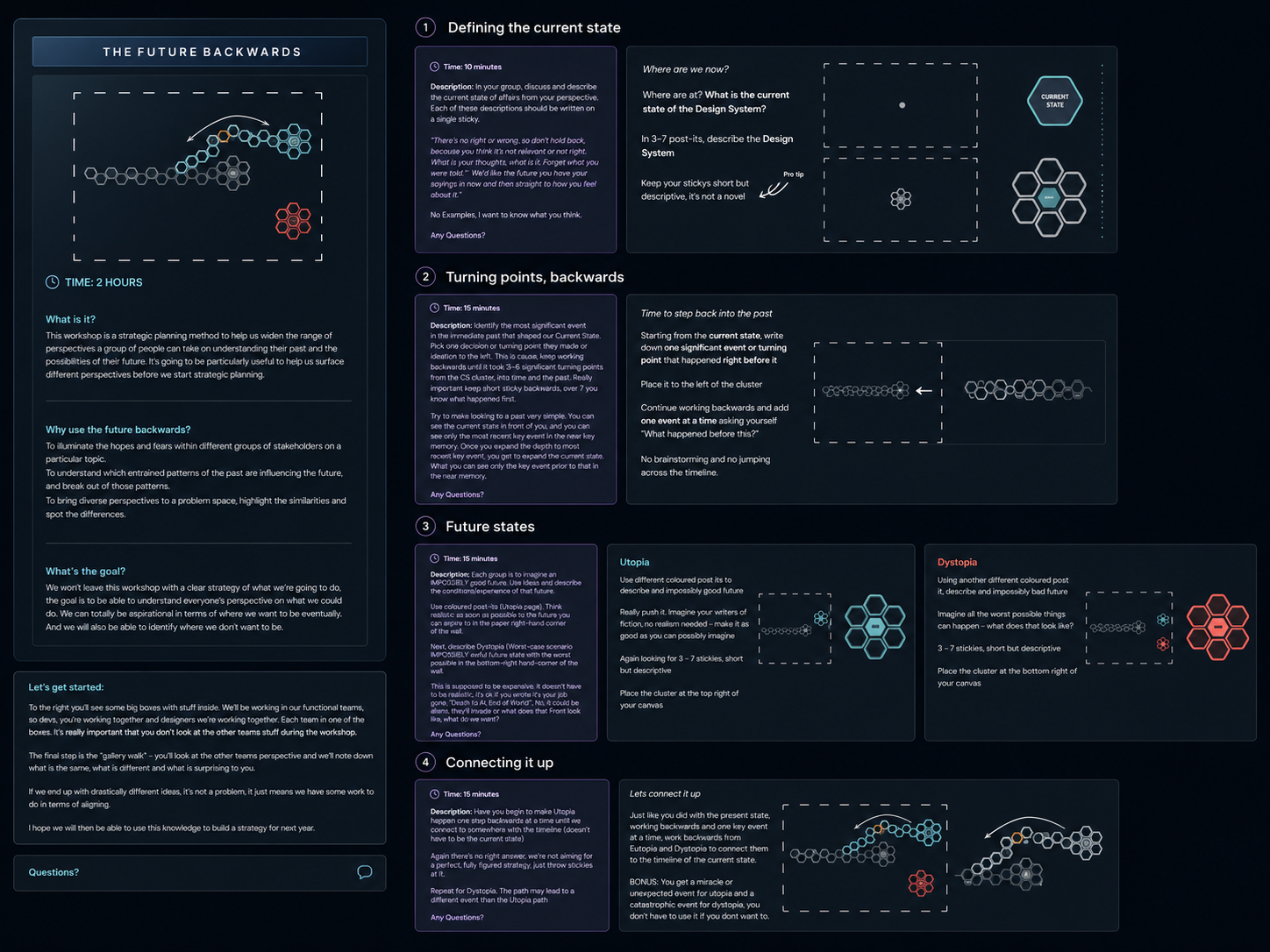
A three-phase, 12-month rollout
Rather than attempting a company-wide overhaul at once, I structured the rollout into three phases over 12 months: build the foundations, expand through real product use cases, then establish the processes needed to maintain and evolve the system.
Phase I: Foundation Building
- Research & audit We audited existing products, patterns and assets to understand inconsistencies, duplication and gaps.
- Component foundation We consolidated and expanded the existing component library, prioritising the elements with the highest reuse across products.
- Documentation We began establishing shared usage guidelines and a central source of documentation so components were not only available, but understood.
Phase II: Expansion and Integration
- Expand through real product needs Instead of designing every possible component upfront, we expanded the system as new product needs emerged—testing components against real use cases.
- Testing & feedback Designers and developers continuously tested components in product work and fed learnings back into the system.
- Build shared expertise I secured a training budget for the entire design team to take Dan Mall's Learn Design Systems course, and encouraged developers and PMs to join relevant training and events. The goal was to create a shared language around the system, not knowledge concentrated within design.
Phase III: Maintenance and Optimization
- Continuous improvement Established feedback and contribution processes so the system could evolve alongside our products.
- Accessibility & quality Embedded accessibility considerations into component standards, using WCAG as our baseline.
- Scale beyond individual products Identified opportunities for the system to support more teams and use cases across the organisation.
KEY COMPONENTS
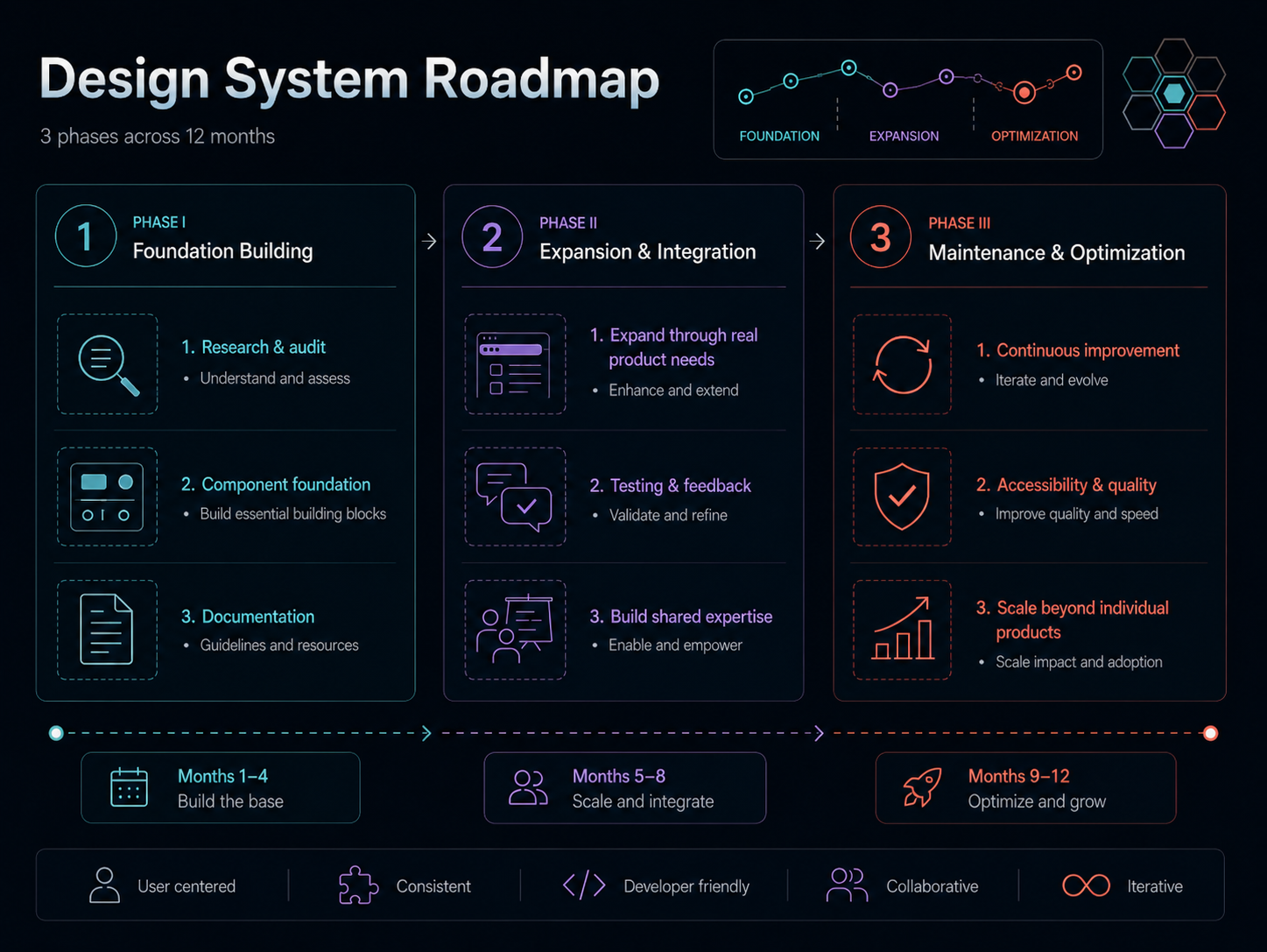
The building blocks of the system
We evolved the library from foundational styles into a more comprehensive system spanning typography, colour, icons, inputs, buttons and complex responsive patterns such as navigation, cards and modals.
But the components themselves were only one part of the challenge. The harder problem was creating a system for how they would be designed, contributed, documented and maintained across multiple teams.
DEVELOPMENT PROCESS
Embedding the system into everyday product work
We didn't have the resources for a dedicated design-system team. So rather than treating that as a blocker, I designed an operating model that distributed ownership across our existing product teams.
The principle was simple: the design system should evolve through product work, not compete with it.
Integrating design system tasks into product development
I secured leadership support to incorporate design-system work directly into feature sprints.
If a team was building a new AI tutor, for example, the components required for that experience would be designed and contributed to the system as part of the same sprint.
This develop-as-we-go model broke a large transformation into manageable contributions while keeping the system grounded in real product needs.
Collaborative design workshops
Because our five designers were embedded across different product teams, I introduced bi-weekly design-system workshops where we could bring upcoming component needs together.
We challenged assumptions, compared use cases and designed components to work across teams and platforms—not just for the feature that originally triggered them.
For highly specialised components, the designer closest to that product retained decision-making ownership.
Structured onboarding and documentation
I established a contribution and onboarding process so designers, developers and product managers knew how to use the system, how to contribute to it and where decisions were documented.
A dedicated Jira board connected design-system work to individual product-team boards, while shared documentation and communication channels made changes visible across teams.
This helped move the design system from a standalone initiative into part of how the organisation built products.
COLLABORATION & FEEDBACK
Feedback loops across every team
Adoption couldn't be mandated by design—it had to be built with the people using the system. I created regular feedback loops across design, engineering and product so issues could surface early and teams could influence how the system evolved.
- Weekly designer–developer check-ins Surface implementation issues and component improvements.
- Product & engineering feedback Understand where components worked—and where teams were working around them.
- Cross-department workshops Introduce new patterns, gather feedback and build shared ownership.
These loops helped us treat the design system as a living product rather than a finished library.
MEASURING SUCCESS
Proving the value of the system
When I initially pitched the initiative to leadership, I knew consistency alone wouldn't justify the investment. I proposed measuring the system through efficiency, quality, adoption and component health.
+35%
story points completed per sprint
90%+
adoption of core components
<10%
component detachment rate
Time saved in product sprints
We compared Jira velocity before and after implementation. Following the rollout, teams completed 35% more story points per sprint, indicating meaningful efficiency gains alongside other changes in our product-development environment.
Reduction in UI/UX bugs
We tracked UI/UX-related issues through our dedicated bug board to identify recurring inconsistencies and understand where the system could reduce implementation errors.
Component health
We used detachment and override rates as signals of component quality. A detachment rate below 10% indicated that most components were flexible enough to support teams without requiring workarounds.
Adoption
More than 90% of core components were adopted across teams, giving us a strong signal that the system was meeting real product needs rather than simply existing as documentation.
Qualitative feedback
Feedback from designers, developers and PMs also pointed to smoother handoffs, less duplicated work and easier cross-team collaboration.
These metrics helped demonstrate the tangible value of the design system to stakeholders and provided clear measures of the project's success. By tracking both quantitative and qualitative results, we ensured that the system met its intended goals and continued to evolve in alignment with company growth.
REFLECTIONS
Challenges and Lessons Learned
Challenges: gaining organisational buy-in
The hardest part wasn't designing components, it was creating organisational commitment around them.
I initially pitched the initiative to leadership around three outcomes: stronger brand consistency, a more coherent customer experience, and faster product development. Importantly, I paired the proposal with success metrics so we could evaluate whether the investment was actually working.
Once leadership was on board, the next challenge was turning support into participation. Together with the design team, I ran ideation workshops with developers, product managers and marketing, and worked with department leaders to establish advocates from each area.
I then created a regular cadence with those representatives and partnered closely with a product designer who helped manage the initiative day-to-day.
That distributed model became critical: the design system succeeded because ownership extended beyond the design team.
Lessons learned
- Start small enough to prove value. Prioritising high-impact components helped us demonstrate value before asking teams to change how they worked.
- Design participation, not just components. Bringing people in early created advocates who felt ownership of the system rather than seeing it as something imposed by design.
- Make contribution part of the workflow. The system became sustainable when contributing to it stopped being "extra work" and became part of shipping products.
- Documentation is part of the product. A component isn't scalable if people don't understand when, why or how to use it.
The biggest lesson for me was that scaling a design system is ultimately an organisational design challenge: the components matter, but the processes, incentives and people around them are what make the system work.
Disciplines
- STRATEGY
- LEADERSHIP
- DESIGN SYSTEM
Next project
Designing for Student Engagement →